Tag Archives: trends
IBM wants to build ‘smarter cities’
Posted on 05. Oct, 2011 by Jonathan Cherry.
Smarter cities? Yeah – we can see this level of control going down real well with folk.
Defending the Bull…
Posted on 03. Oct, 2011 by Jonathan Cherry.

Is that the Bull market or the Bull %^&$?
Picture of the day from the Occupy Wall Street protests that some news organisations are bothering to report on.
[thanks Brett]
Is corporatism under threat?
Posted on 28. Sep, 2011 by Jonathan Cherry.
Main stream media has been feeding us sound bites and neatly packaged stories of events that now, have pretty names. Things like the ‘Arab Spring’, the ‘Euro debt crisis‘ and the ‘Double dip‘ may sound like something you may wanna order for a kids party, but are we getting any real sense of what the hell is really going on right now?
Now there is a new thing – called ‘Occupy Wall Street’, which isn’t really being spoken about in polite circles, but it appears that the appetite for public protest in America is emerging once again from the 60s.
So what’s going on? Traditional media seem to be offering half truths and whole lies. People who turn out not to be who they say they are, make outrageous statements on tv platforms who then say they have no idea how that individual got onto their channel in the first place.
So what’s going on? In a word – FEAR! The fantasy is manifesting as reality. Is the debt crisis real? Who knows – they say so on TV, but we haven’t counted the money ourselves. Just because you’ve been told the sea is blue doesn’t make it so.
So with a world constructed on emotion – do people still feel warm and fuzzy about a corporate system that they don’t trust and are prepared to take to the streets, in protest and with potential of arrest, to rid themselves of? In truth radical progress only comes as a result of widespread destruction.
Today it’s Goldman Sachs tomorrow Pick and Pay. The birth of the future of commerce may just be starting right now.
9 Consumer trends for 2011
Posted on 16. Nov, 2010 by Jonathan Cherry.
Mintel, the market intelligence agency, recently released their predictions for trends in consumer behaviour in 2011.
The most important sentence we took from the report:
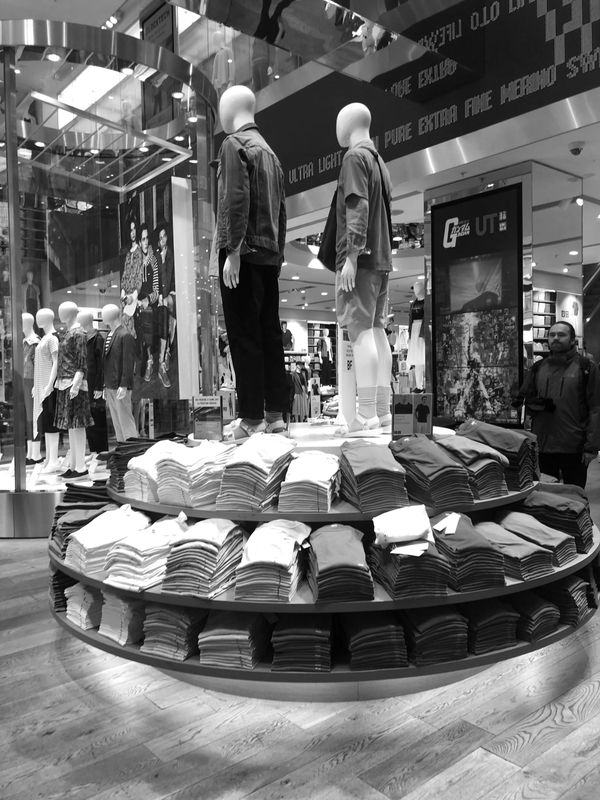
‘In 2011, brands may need to get more creative to lure consumers into stores, offering more than just retail and be a venue, not just a shop. Service may extend into advice and demonstrations, while exclusivity and environment may also be key aspects to engage consumers with real life, not virtual, shopping experiences.’
Real, memoreable experiences. That’s what it all comes down to at the end of the day. And it’s ironic that something so simple seems to be so difficult to achieve.
The rest of the points:
1. Prepare for the Worst With a heightened sense of what economic collapse looks like thanks to the global recession, a renewed emphasis on prevention will drive consumers to think defensively. In the UK, 43% of consumers say “Trying to add to my rainy day savings/emergency fund” is a priority for this year, up 15% from last year. In the US, a third of consumers say they’re using debit rather than credit, and debit transactions are forecasted to rise nearly 60% between 2000 and 2010. Consumers want to know what they’re getting themselves into: no loopholes, no hidden costs and no pricey upgrades. So 2011 may see the need for brands to demonstrate how a product or service delivers long-term benefits or prevents problems down the road.
2. Retail Rebirth With online experiences developing rapidly, for bricks and mortar retailers, discounting is a no-win battle against the internet. In the UK, 47% of consumers are only buying clothes on sale, offer or promotion and 35% say their choice of store is determined by special offers or discounts. In the US, 35% say their choice of store is determined by special offers or discounts. In 2011, brands may need to get more creative to lure consumers into stores, offering more than just retail and be a venue, not just a shop. Service may extend into advice and demonstrations, while exclusivity and environment may also be key aspects to engage consumers with real life, not virtual, shopping experiences.
3. Where its App With smartphones becoming the dominant mobile force, QR codes and app technology will pique interest, provide portals into unique experiences and improve our quality of life. In the US, sales of smartphones grew 82% from 2008 to 2010. In the UK, 28% of consumers own a smartphone and by 2015 iPhones will make up 11% of all total devices used in the UK. As consumers are empowered like never before, 2011 will see people take a deeper interest in where they are: from the city to a specific store. Geography and status can be redefined through retail, presenting savvy brands with an opportunity for increased location based services, promotions and solutions. To capitalise on consumer awareness of technology, brands will need to take QR codes beyond niche understanding, using it to explain and offer exclusive content. Rather than displacing our interaction with the physical, this technology has the potential to reinvigorate our relationships with brands, retailers and with each other.
4. No Degree, No Problem Economic uncertainty has changed the workplace and the meaning of job security for the foreseeable future. As a result consumers will continue to question higher education’s ROI and alternative channels for learning will gain credibility. In 2011 we may see more lifelong learning in the workplace, corporate sponsored degrees and companies investing in employees through education and training rather than salary or benefits. Meanwhile learning while doing, rather than learning in a lecture hall, may become a focus and with DIY education gaining steam, there’s an opportunity for brands to play host.
5. On Her Own Terms Women are earning and learning more than men, creating new gender roles in business and consumerism. In 2011, age is no longer an easy marker for lifestage. Opportunities lie for brands to focus less on the year the female consumer was born, and more on where she’s at with her life right now. In the US in 2008, 27% of men reported being the sole cleaner in their household, in 2010, that number jumped to 32%. Meanwhile, among under-35s, more UK women than men research financial products online. So, 2011 may see a counter trend to the ‘metrosexulaity’ of men in a ‘masculinization’ of women. Implications for how brands market to women will be big, especially in sectors such as automobiles and sports. With men helping around the house more than ever, there may be an opportunity for brands to cater household products, as well as retail experiences accordingly.
6. Retired for Hire People are working beyond retirement – either due to financial need, or because they have grown attached to a lifestyle of leisure and pleasure. With half of Americans having no retirement account, the number of over 65s working will reach nearly 20% by 2014. In the UK, 77% of over 55s plan to continue working after retirement age “in order to enjoy and prolong a better standard of living”. In 2011, this group may prove an untapped market for advertisers, affecting a number of consumer sectors. Vitality, energy and longevity become key product qualities in the food and drink sector, while health and beauty messages may need to centre on anti-ageing properties, nutraceuticals and older models to reach this target group.
7. The Big Issue Our attitude toward weight is polarising, pitting the rise of the super-healthy against the eternal appeal of indulgence. In the UK, almost a quarter of women wear clothes in sizes 18 and over, a third of men wear XL clothes or bigger and more than 30% of UK children are now classed as overweight. Meanwhile 34% of US adults age 20 and over are obese. Therefore, 2011 may see a wider array of products catering to an obese market: from portion control and more info on packaging to low-cost healthy fare and products to firm and salve chaffed or sagging skin.
8. Garden State Modern city dwellers have a growing love of gardening and a need for nature and with fresh, organic produce still economically out of reach for many, consumers are finding their own ways to bring healthy home. In the US, 26% of internet users purchased vegetable seeds in past year, 19% bought vegetable/flower garden fertilizer and 27% like to grow vegetables at home. While in the UK, 1 in 5 consumers grow their own fruit & vegetables and the UK Allotment waiting list has grown 20% in 2010. In the US, 40% of people with a garden agree “Growing fresh food to cook with” is important. In 2011, rural tourism, working farm holidays and garden leisure may benefit – while rising food and commodity prices may see a boost for seed sales as this trend develops.
9. Who Needs Humans As we move into an ever more digital era, automated technology has machines replacing people – for better or worse. While cashier-less checkouts have become common place, we’re starting to see machines creep into new territories, including hospitals, libraries, pharmacies and the home. Therefore, 2011 may see certain jobs permanently displaced by technology – that includes service jobs, not just manual or factory work. But backlash and balance seeking may lead to an increased cache for hyper-personal goods and services.
Source: Mintel
Collaborative dining
Posted on 22. Oct, 2010 by Jonathan Cherry.
Just so you know – this is where the world is heading. Soon we’ll need an app to organise a braai and a Province Currie Cup win for goodness sake.
Hot trends right now: Bite marks and huge contacts
Posted on 13. Jul, 2010 by Jonathan Cherry.
According to American media reports – US teenagers are seriously into biting each other [thanks to all things Twilight] and wearing Lady Gaga ‘bug-eye’ contacts [as seen in the Bad Romance music video].
Parents are worried, but teenagers are sharing the love at ‘rainbow parties’, while choking each other high on meth and the fumes from their Hello Kitty nail polish.
We blame Lady Gaga and outcomes based education [OBE] on the stupidity, because according to the Times, the appearance of her eyes in the music video is computer-generated. Somebidy please slap them and get them back outside playing with the dog or something like that.